← Back to workWebsite · Design, development and SEO · 2026
Inmental
It's the website of Inmental Interactive, the agency I work at. I planned, designed and built it with AI agents.
Visit the live site ↗---
- role:
- Planning, content structure, design, development and SEO
- team:
- Sole designer on the project, from structure to launch
- built with:
- Figma, Claude Code, Codex, Next.js and GSAP
- goal:
- Get Inmental to show up on Google and in AI answers
- status:
- Live and indexed since September 2026
- year:
- 2026
---
inmental.mp4
What Inmental is
Inmental Interactive builds interactive experiences for brands at events. It makes motion games, interactive walls and floors, AI photo booths, virtual reality and immersive screens, and runs more than 300 activations a year.
How I planned it
I started with the structure, thinking about search. There's a page for each of the eight activation types and another for each of the five industries, plus cases, about and contact. That way each service can be found on Google on its own, and its page can grow when there's more material.
The hardest part was the content. There were more than 100 GB of photos and videos of what Inmental had done in its 15 years as a company. I sorted them and used only the best in quality, innovation and filming.
Decisions
01
Color
I dropped the brand's accent color. The interface is dark and neutral, and the color comes from the event photos and videos.
02
Navigation
The logo is large and fixed, and the menu is a column against the right edge. That leaves the center free, so images and videos show larger.
03
Services on the home page
The eight activation types appear as a list on the home page. Pick one and the grid shows its photos and videos, which advance on their own and can be paused. To see the full service page there's a separate button.
04
Cases
Each case starts with the brand, the context and the venue. Then it covers the idea, what was built, how it worked and what people took home. The photos open up to show the totem, the interface and the pieces in detail.
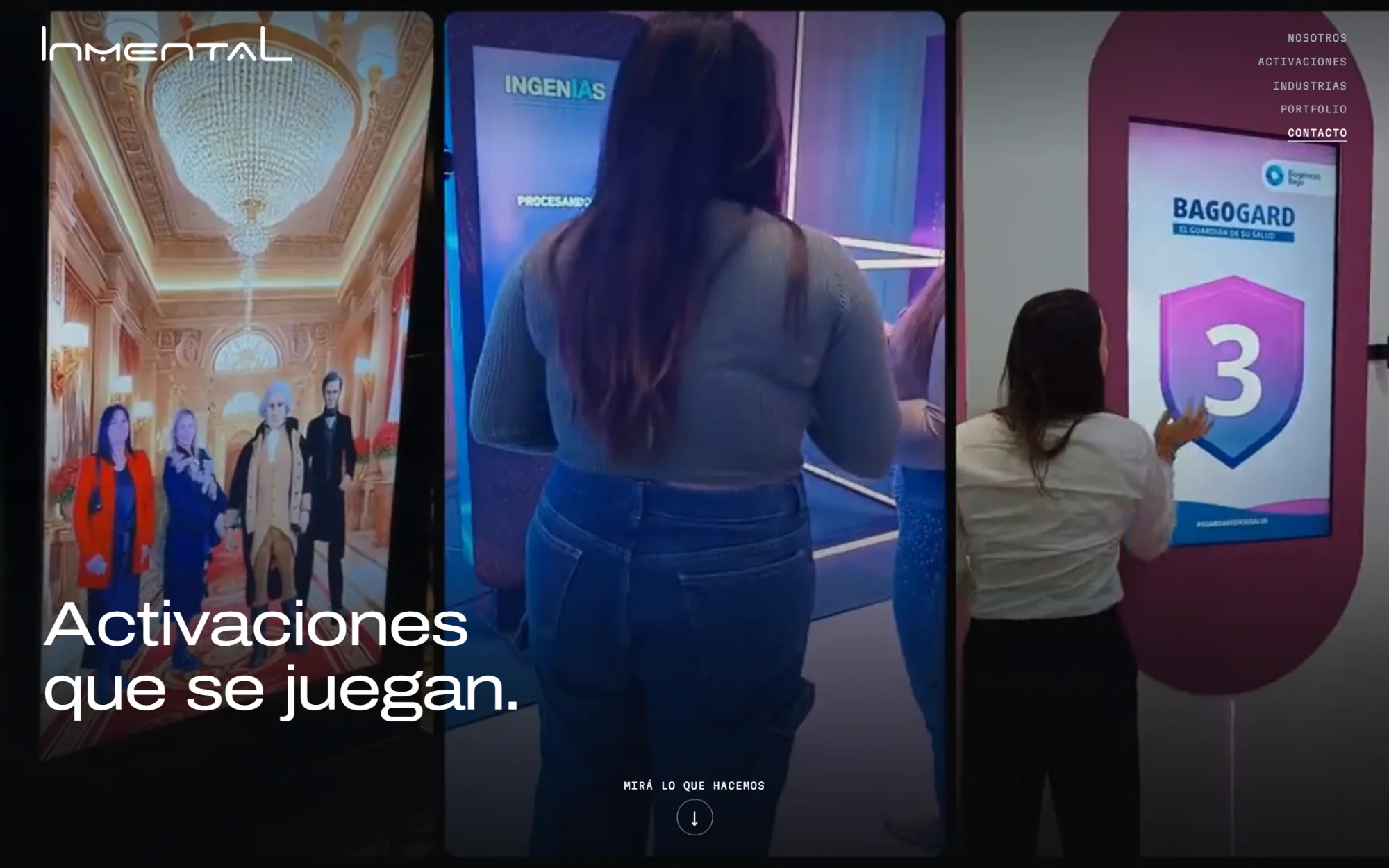
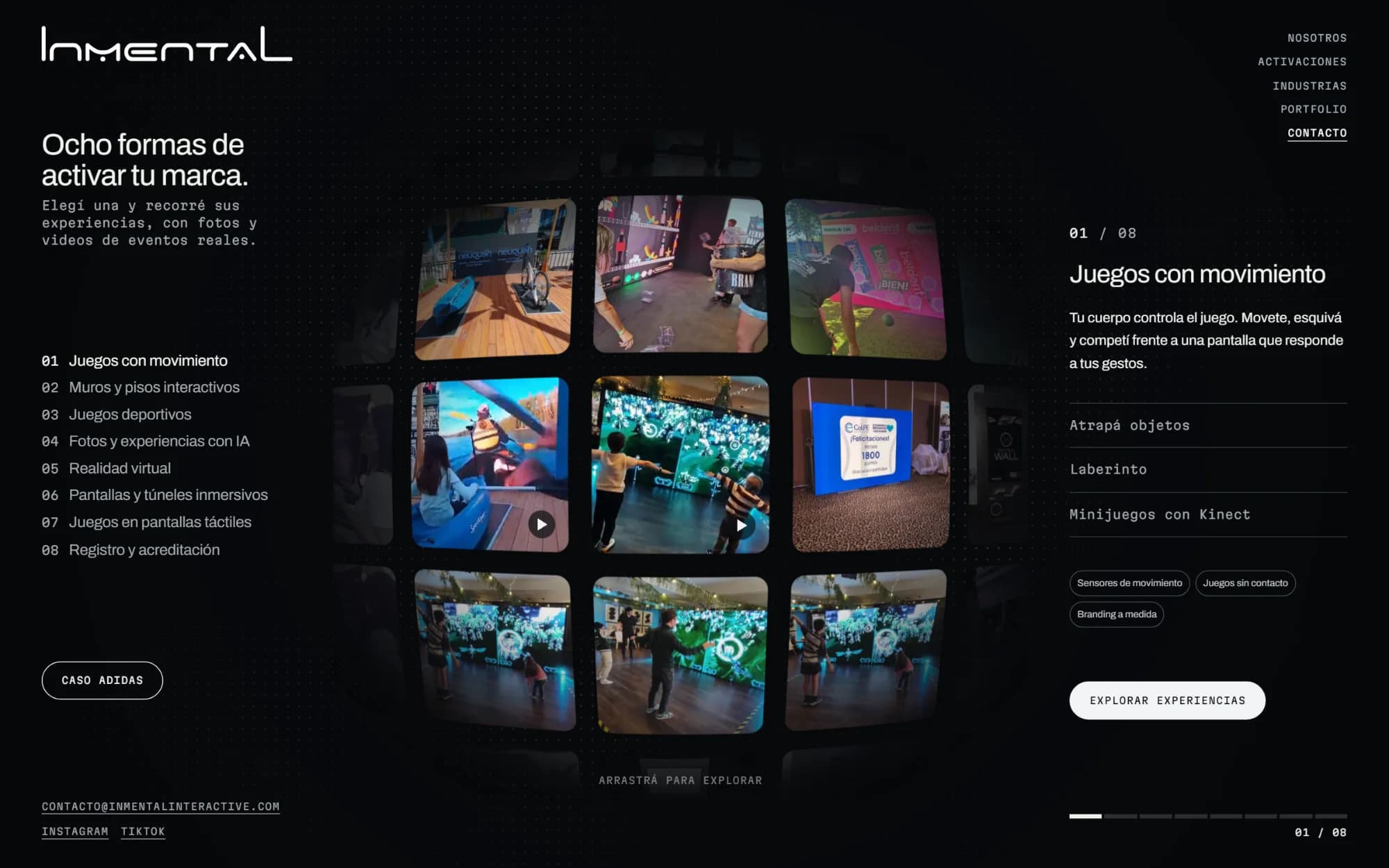
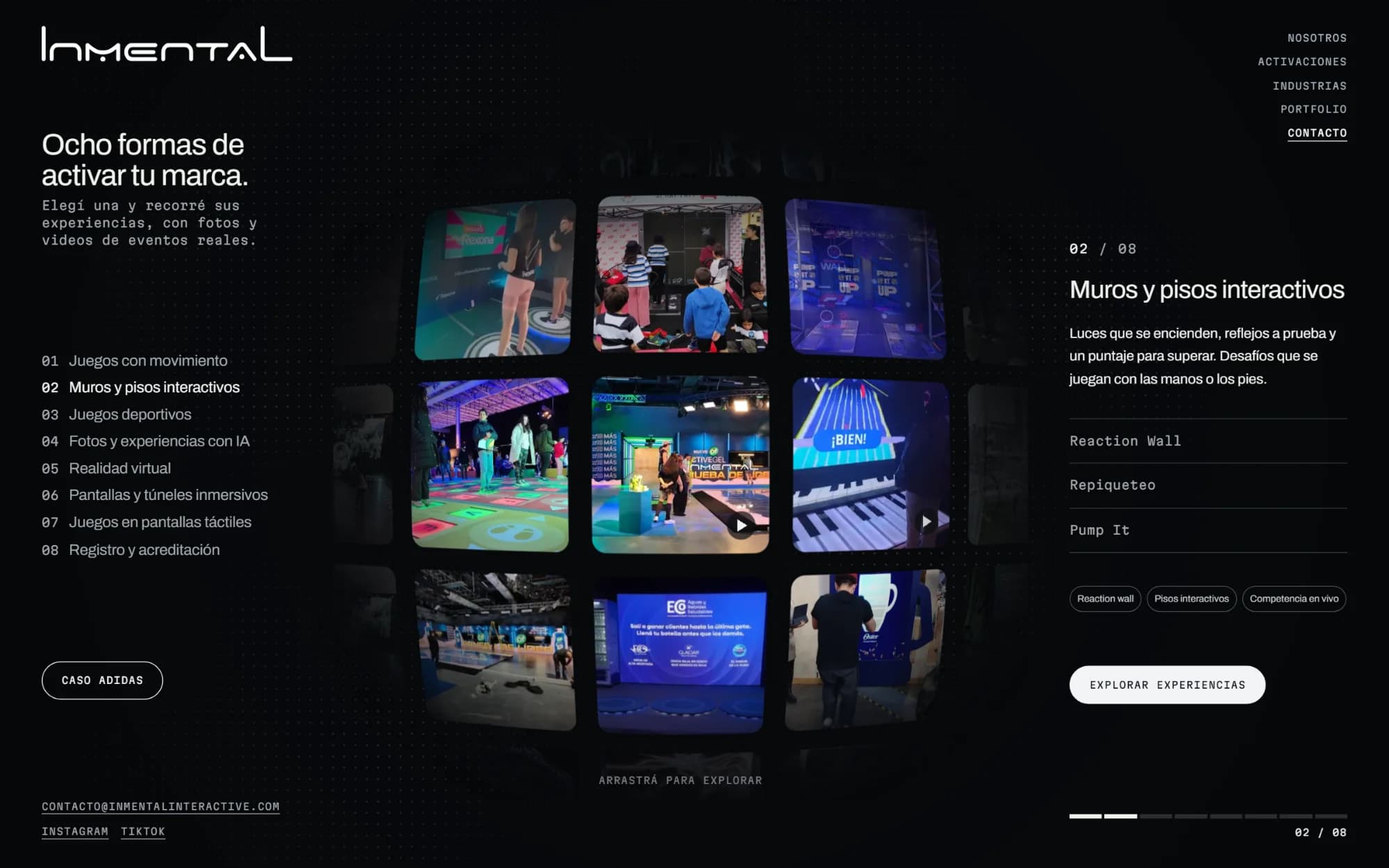
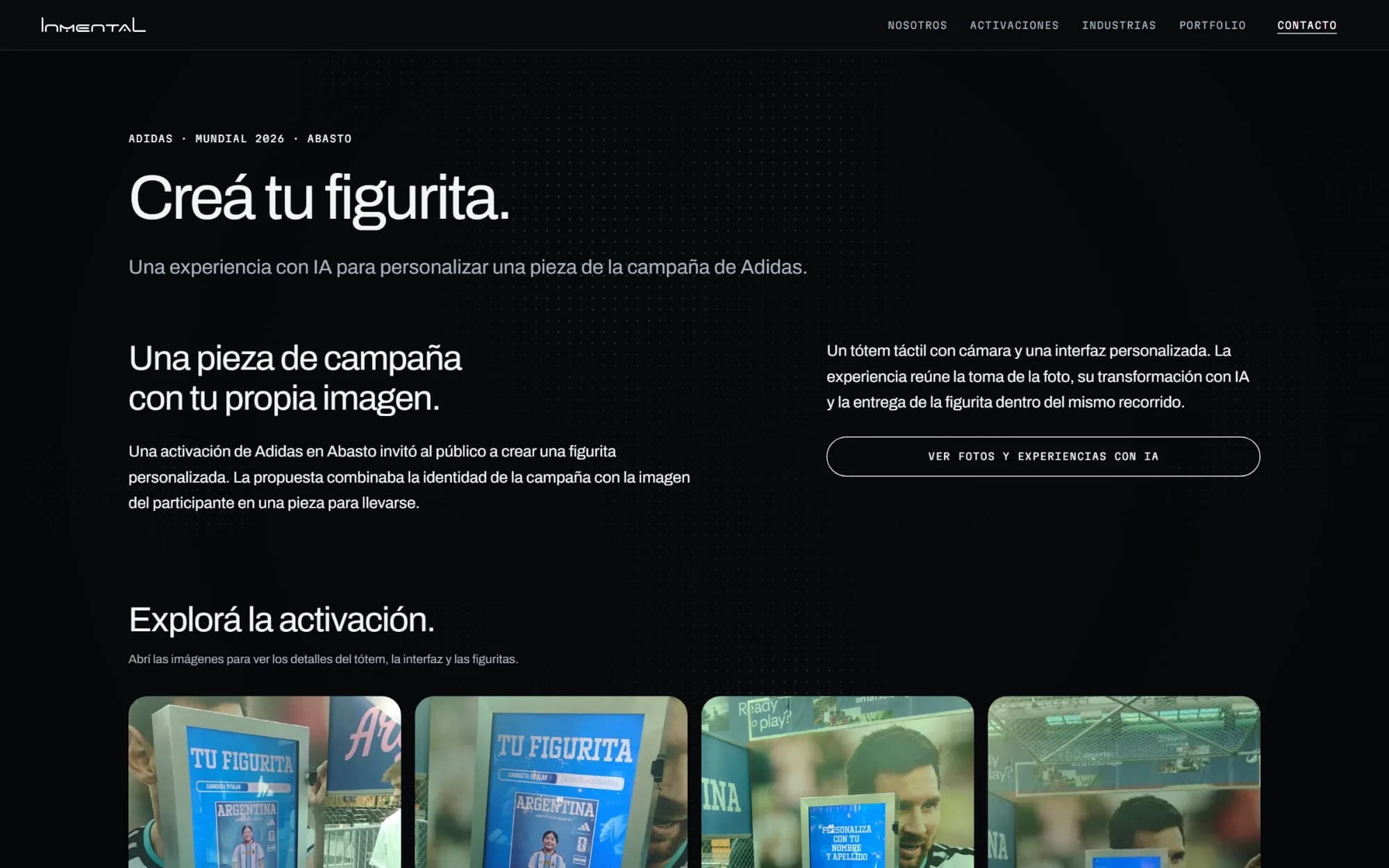
01 / 04 · The headline over three activation videos.
How I worked with AI
I worked with Claude Code and Codex as if they were a developer you have to explain everything to precisely. I gave them the look from Figma and three references. I reviewed each version in the browser and asked for specific fixes to alignment, animation timing and hierarchy.
When something broke and it didn't show in the code, I recorded the screen and showed it to them. That's how we fixed a black flicker between images. Afterwards I had to optimize, because the transitions were slowing the browser down.
I did something similar with the copy. I built skills with writing rules so the agents wrote in the brand's tone, and edited the texts several times until they sounded like Inmental.
For SEO I used skills on every page. With them I wrote titles and descriptions, the company's structured data and an FAQ section with what people search for. I also rewrote the copy so it said clearly what Inmental does and for whom.
Outcome
- 8 activation pages, 5 industry pages, cases, about and contact.
- Live and indexed on Google since September 2026.
- It's been online for less than a month, so there's no traffic or inquiry data to show yet.
- Next is a panel so the team can add content without depending on me.
Takeaways
01
SEO from the structure
Making one page per service and per industry from the start is what let each thing be found on its own.
02
Clear copy
If the copy says what the company does and for whom, it serves the person who visits and also the AI deciding who to recommend.
03
Choosing the material
There were more than 100 GB of material, and choosing what to use was most of the work.